
English Education Lecturers Conduct Community Service (PKM) Training on Quantitative Data Analysis Using SPSS at FKIP UNTAN
Pontianak, 23 July 2026 — Lecturers from the English Education Study Programme, Faculty of Teacher Training and Education (FKIP), Universitas Tanjungpura, conducted a Community Service (PKM) activity entitled “Quantitative Data Analysis Training Using SPSS for FKIP UNTAN Students” on Thursday, 23 July 2026.
The activity was primarily attended by senior and final-year students of the English Education Study Programme. It was also attended by lecturers from the Indonesian Language Education Study Programme and the Chinese Language Education Study Programme, reflecting broader academic interest in quantitative research and data analysis across language education disciplines at FKIP UNTAN.
The training was designed to strengthen participants’ understanding of quantitative research and to provide practical experience in analysing research data using SPSS.
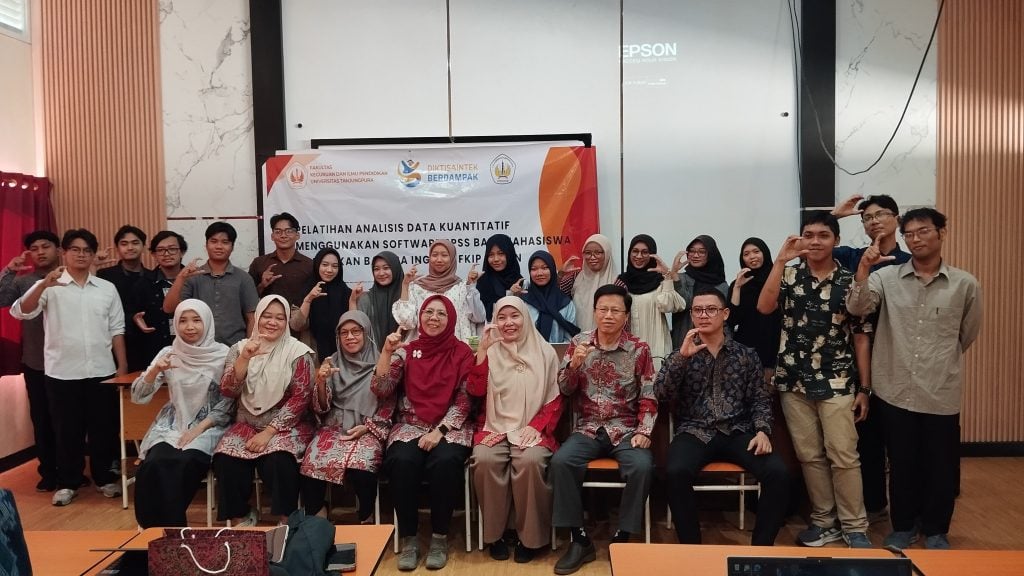
The PKM team, participating lecturers, and students at the Quantitative Data Analysis Training Using SPSS.
The PKM team was led by Eka Fajar Rahmani, M.Pd., with Drs. Luwandi Suhartono, M.Hum., Surmiyati, M.Ed., PhD, Tri Mulyaningsih, M.Pd., Dr. Eni Rosnija, M.Hum., and Dr. Dewi Novita, M.App.Ling. serving as members of the team.
As lecturers of the English Education Study Programme, the team organised the activity as part of its Community Service commitment to supporting the development of academic and research competencies, particularly in quantitative research methodology and data analysis.
The programme began with an opening ceremony attended by lecturers and students. As part of the ceremony, all participants stood together to sing the Indonesian national anthem, Indonesia Raya.
The activity was officially opened by Drs. Luwandi Suhartono, M.Hum. In his opening remarks, he welcomed the participants and highlighted the importance of developing research competence among university students, particularly those preparing to conduct or complete undergraduate research.
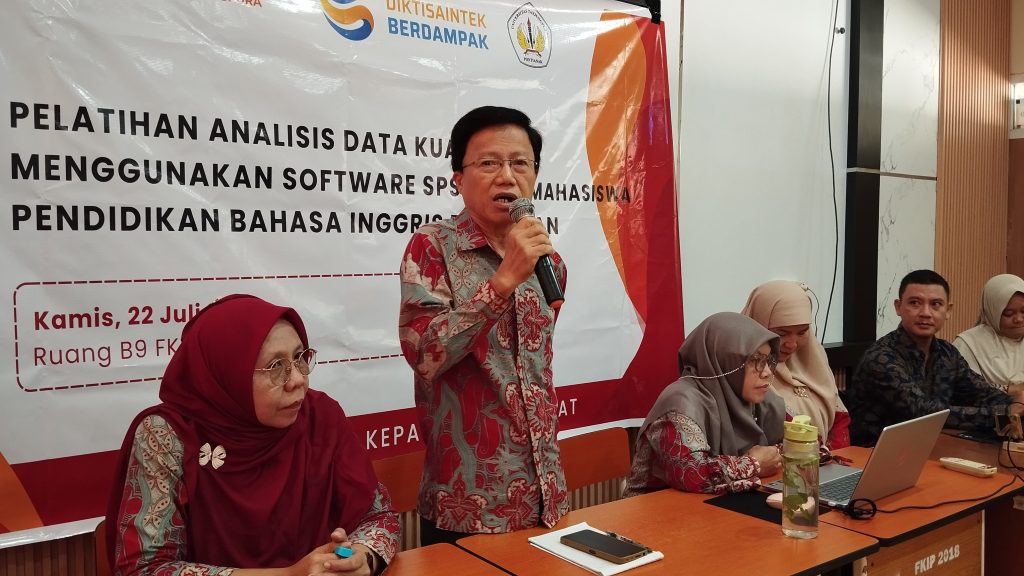
Drs. Luwandi Suhartono, M.Hum. officially opening the activity
The training featured two main instructors, each addressing a different but complementary aspect of quantitative research.
The first session was delivered by Surmiyati, M.Ed., PhD, who provided a comprehensive theoretical introduction to quantitative research. She explained the fundamental principles of quantitative research, the role of numerical data in research, and the importance of selecting appropriate methods of analysis to answer research questions.
Her session provided participants with an important conceptual foundation before they proceeded to the practical data analysis session.
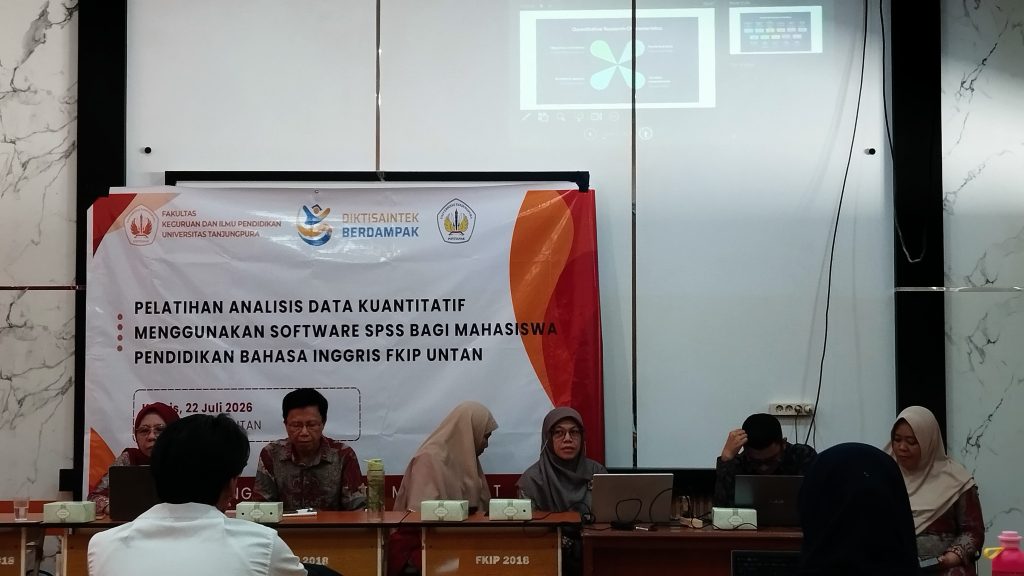
Following the theoretical session, participants continued with a hands-on session led by Chandra Fauzi, S.Pd., Gr., M.Pd. The second session focused on the practical analysis of quantitative data using SPSS.
During the session, participants were guided through the main stages of working with research data in SPSS. They learnt how to understand the structure of a dataset, manage variables, conduct statistical analyses, read SPSS output, and interpret the results appropriately.
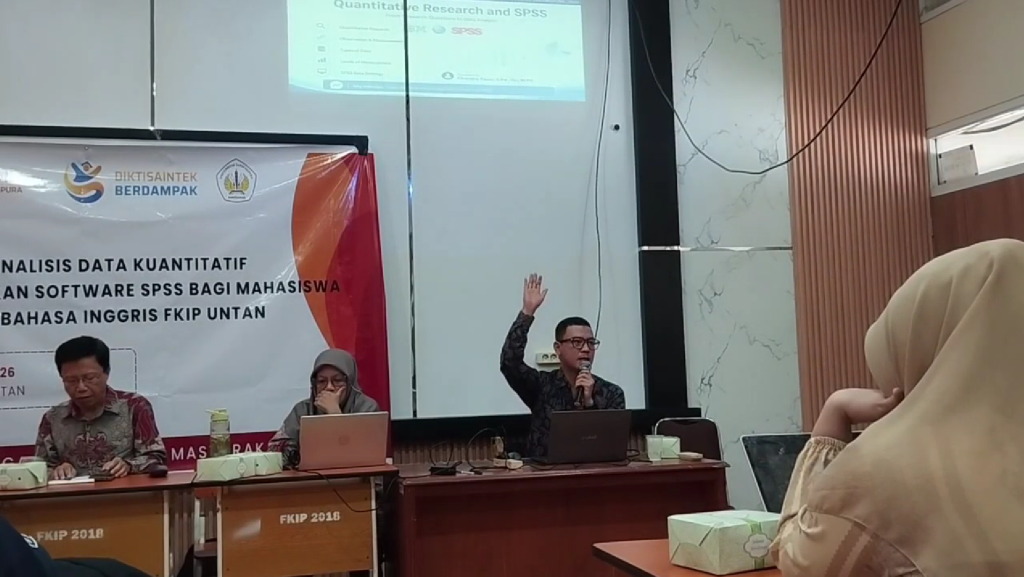
Rather than simply observing the instructor demonstrate the software, participants were encouraged to follow each stage of the analysis using their own devices. This hands-on approach enabled them to gain direct experience of using SPSS and to understand how statistical procedures can be applied to research data.
The practical session also emphasised that quantitative data analysis is not merely about generating statistical output. Participants were encouraged to understand why a particular statistical procedure is selected, what the results mean, and how the findings should be interpreted accurately and responsibly.
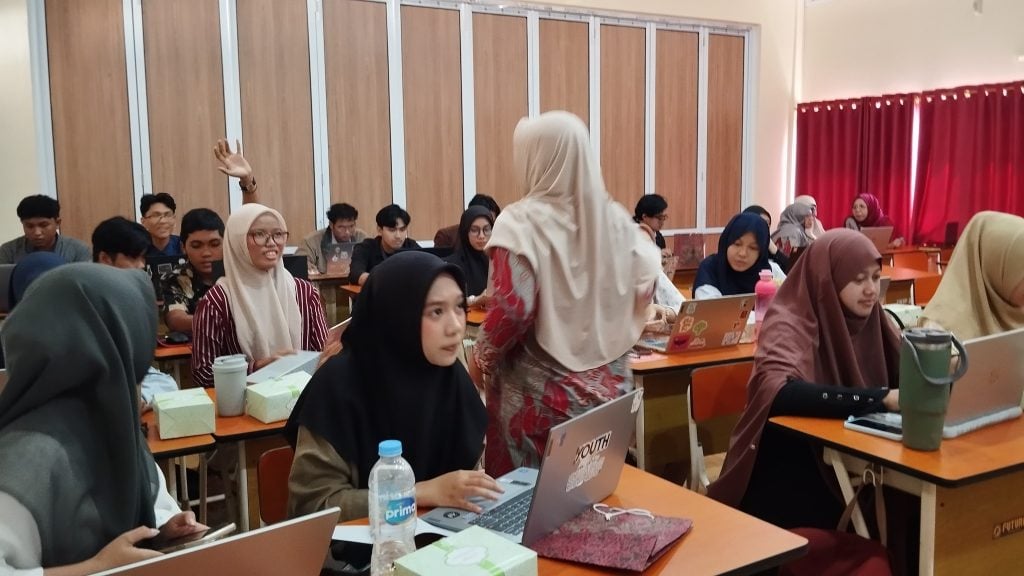
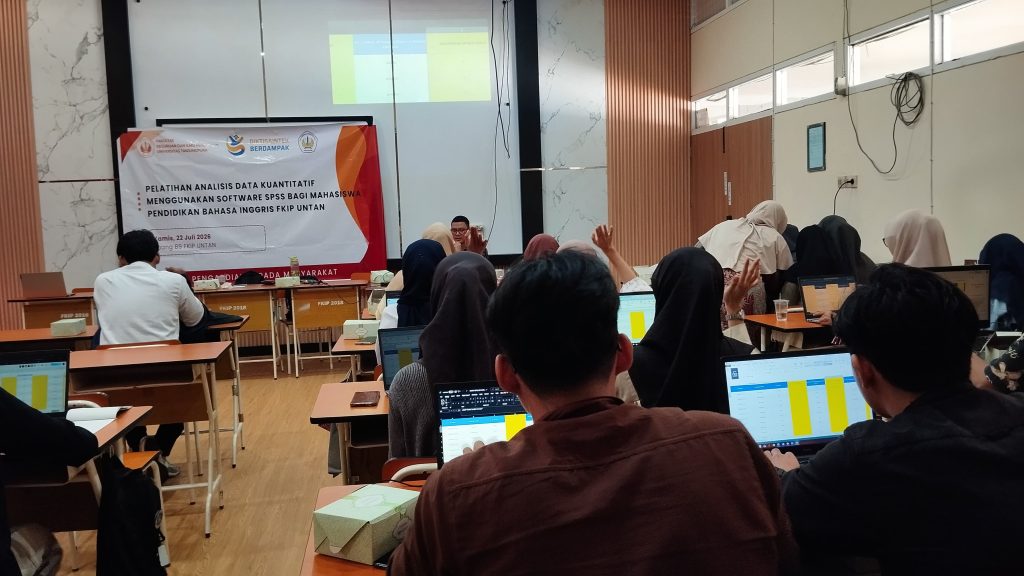
Throughout the training, students actively followed the demonstrations, worked with sample data, and asked questions whenever they encountered difficulties. The interactive nature of the session also enabled participants to discuss both technical issues related to SPSS and conceptual issues concerning the interpretation of quantitative data.
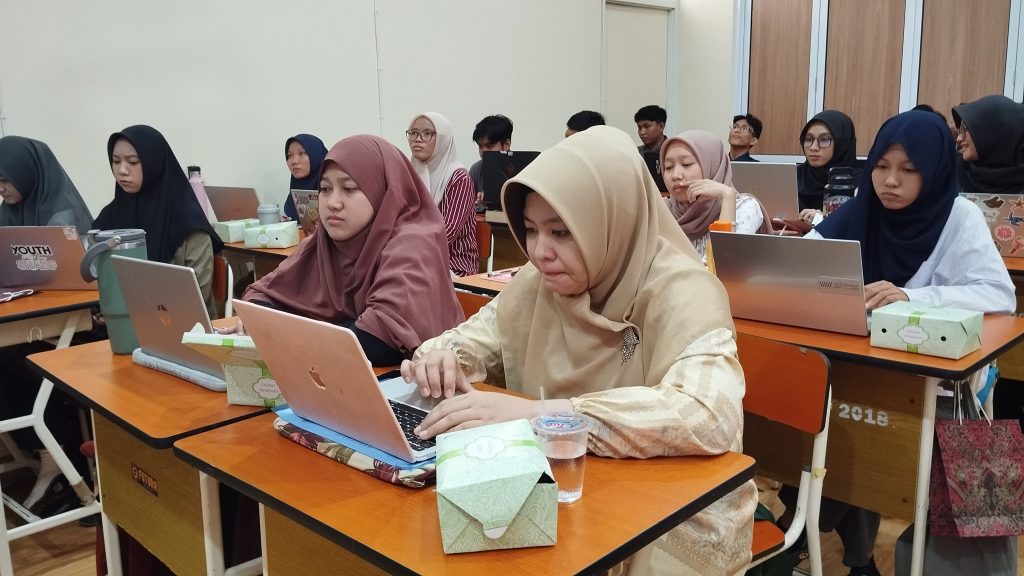
Students & guest lecturers from Mandarin major and Bahasa Indonesia major taking part in the hands-on activities and discussions
The participation of lecturers from the Indonesian Language Education and Chinese Language Education Study Programmes also added an interdisciplinary dimension to the activity. Their presence demonstrated that quantitative data analysis skills are relevant not only to English language education, but also to research across other language education fields.
For senior and final-year students, the training was particularly relevant, as quantitative data analysis is an important component of many undergraduate research projects. The ability to manage research data and interpret statistical results appropriately can support students in completing their theses and other academic research activities.
Through this Community Service programme, the English Education lecturers of FKIP Universitas Tanjungpura sought to bridge theoretical knowledge and practical research skills. By combining an introduction to quantitative research with direct practice using SPSS, the programme provided participants with an opportunity to develop both their conceptual understanding and technical competence.
The activity is expected to help participants become more confident in working with quantitative research data, selecting appropriate analytical procedures, using SPSS independently, and interpreting statistical findings in a careful and responsible manner.